
Welcome to
BEST
IN
SHOW
Connect with thousands of animal enthusiasts, share your experiences, and explore a world of pets and professionals.
It’s free to join!
Already have an account? Log in

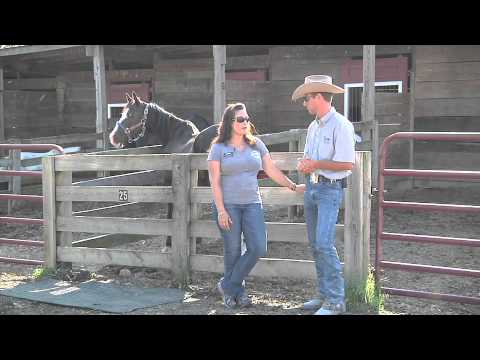
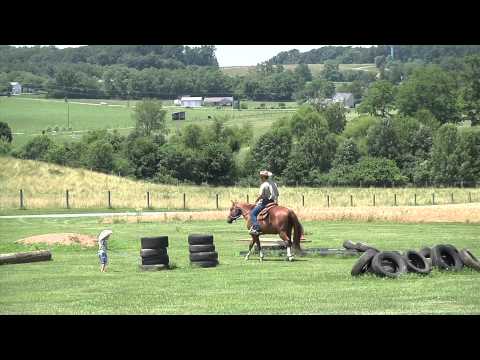
So who is this Purdum fellow anyway? Scott grew up riding horses and began riding at the age of three. When he was only sixteen, he took on his first attempts at real training. His parents had a high-strung mare that spooked at practically everything, and Scott believed he could help the horse. He read volumes of books about horses and horse training, and he watched numerous training videos, too. He took the best parts of all of them and created his own formula. Upon his success with the mare, word about him spread to other horse owners in the area. Before long, he had three horses a month in training. Then that number increased to five, and then to ten.
What makes this 23-year-old trainer so special? Well, for one thing, Scott has learned to think like a horse and to use this kind of knowledge in his training methods. Scott uses an equine’s natural instincts to his advantage. He explained it this way:
Horses are herd animals and are fight-or-flight creatures, and they usually prefer flight. A horse can go from grazing calmly one second to what Scott calls a “high-energy state” the next second. Centuries of instincts have programmed this in equines to enable them to escape predators in the wild. The trainer’s job is to get the horse into a calm, relaxed state of mind. According to Scott, a horse in this state of mind is willing and will do anything asked of it. “They might not always get the right answer, but they’re sure as heck going to try.”
How does Scott accomplish this feat? By teaching a horse to pay attention to his energy. It’s all about the energy.
In each group of horses, there’s an established “pecking order.” One horse will be viewed by the other horses as the leader or as the dominant horse. The other animals in the herd get their energy from that one horse. They take their cues from it. If it’s calm, they’re calm. If it’s nervous and excited, they follow suit. Let’s say a subordinate horse has positioned itself at the pasture gate, and the dominant horse has decided that it wants to be at the gate. The dominant horse lays its ears back, gets into a high-energy mode, and pushes the lower horse out of the way. The lower horse reads the herd leader’s energy and runs out of the way, giving up its position in favor of the dominant horse. Now the lead horse has what it wants, so it becomes calm. The submissive horse realizes that the dominant horse has become calm, so in turn, it calms down, also. To be an effective trainer, Scott establishes himself as the dominant “horse.”
Scott says he often talks to owners who have tried remaining calm when their animals misbehave, yet the horse does not calm down, and it remains excited, even though its handler is calm and relaxed. What went wrong? Why didn’t it work? Scott explains that the problem here is that the horse does not recognize the human in question as the leader or dominant horse, so the calm state of mind does not transfer. For the horse to truly pay attention and respond to the energy you convey, you must first establish yourself as the leader.
Scott’s basic training philosophy? He believes successful training has two parts: the horse’s mind and the horse’s body. He states that 90% of the times, misbehaviors are not the problem. Instead, they’re the symptoms of an underlying, bigger problem. In order to alleviate the symptomatic inappropriate behavior, the underlying issue must be identified and handled first, then the symptoms will dissipate.
Scott calls his training methods “advantage horsemanship.” When asked how it compares to natural horsemanship, he explained that the two schools of thought have much in common, but that they also have differences. Scott shed some light on this topic by saying that there’s actually nothing natural about riding a horse: “Out on the open range, you don’t see a lion on top of a horse unless the big cat is acting the part of predator.
What makes this 23-year-old trainer so special? Well, for one thing, Scott has learned to think like a horse and to use this kind of knowledge in his training methods. Scott uses an equine’s natural instincts to his advantage. He explained it this way:
Horses are herd animals and are fight-or-flight creatures, and they usually prefer flight. A horse can go from grazing calmly one second to what Scott calls a “high-energy state” the next second. Centuries of instincts have programmed this in equines to enable them to escape predators in the wild. The trainer’s job is to get the horse into a calm, relaxed state of mind. According to Scott, a horse in this state of mind is willing and will do anything asked of it. “They might not always get the right answer, but they’re sure as heck going to try.”
How does Scott accomplish this feat? By teaching a horse to pay attention to his energy. It’s all about the energy.
In each group of horses, there’s an established “pecking order.” One horse will be viewed by the other horses as the leader or as the dominant horse. The other animals in the herd get their energy from that one horse. They take their cues from it. If it’s calm, they’re calm. If it’s nervous and excited, they follow suit. Let’s say a subordinate horse has positioned itself at the pasture gate, and the dominant horse has decided that it wants to be at the gate. The dominant horse lays its ears back, gets into a high-energy mode, and pushes the lower horse out of the way. The lower horse reads the herd leader’s energy and runs out of the way, giving up its position in favor of the dominant horse. Now the lead horse has what it wants, so it becomes calm. The submissive horse realizes that the dominant horse has become calm, so in turn, it calms down, also. To be an effective trainer, Scott establishes himself as the dominant “horse.”
Scott says he often talks to owners who have tried remaining calm when their animals misbehave, yet the horse does not calm down, and it remains excited, even though its handler is calm and relaxed. What went wrong? Why didn’t it work? Scott explains that the problem here is that the horse does not recognize the human in question as the leader or dominant horse, so the calm state of mind does not transfer. For the horse to truly pay attention and respond to the energy you convey, you must first establish yourself as the leader.
Scott’s basic training philosophy? He believes successful training has two parts: the horse’s mind and the horse’s body. He states that 90% of the times, misbehaviors are not the problem. Instead, they’re the symptoms of an underlying, bigger problem. In order to alleviate the symptomatic inappropriate behavior, the underlying issue must be identified and handled first, then the symptoms will dissipate.
Scott calls his training methods “advantage horsemanship.” When asked how it compares to natural horsemanship, he explained that the two schools of thought have much in common, but that they also have differences. Scott shed some light on this topic by saying that there’s actually nothing natural about riding a horse: “Out on the open range, you don’t see a lion on top of a horse unless the big cat is acting the part of predator.


Photos


