Welcome to
BEST
IN
SHOW
Connect with thousands of animal enthusiasts, share your experiences, and explore a world of pets and professionals.
It’s free to join!
Already have an account? Log in
Thoroughbreds have delicate heads, slim bodies, broad chests, and short backs. Their short leg bones allow a long, easy stride. They are sensitive and high-spirited. Averaging 16 hands (64 inches, or 163 cm) high and weighing about 1,000 pounds (450 kg) at maturity, Thoroughbreds are usually bay, chestnut, brown, black, or gray. Outstanding for speed and stamina, they have been combined with and have improved several other breeds of horses. The term thoroughbred is sometimes incorrectly used to mean purebred, but Thoroughbreds are a specific breed, registered in the General Stud Book of the English Jockey Club, organized about 1750, or in the studbooks of similar clubs in other countries.
A horse having only one Thoroughbred parent is called a Grade Thoroughbred in the United States and a half-bred in Great Britain. Grade Thoroughbreds may be used as hunters, polo ponies, stock horses, or riding horses, depending on their training.
Without assurance, beyond all reasonable doubt, of the identity of every Thoroughbred which competes, or which is bred with a view to continuing the breed, the sport of racing as it is known today, could not exist. Nor would there be any possibility of measuring results of the centuries-old quest to improve the Thoroughbred.
When The Jockey Club published its first volume of the Stud Book the foal crop was about 3,000. By 1986 it exceeded 51,000. The Jockey Club embraced new computer technology to meet the registration challenges posed by such large numbers. Today, The Jockey Club manages one of the most sophisticated computer operations in the country.
Its database holds the names of more than 1.8 million horses on a master pedigree file, names which trace back to the late 1800's.
The system also handles daily results of every Thoroughbred race in North America, as well as processing electronically-transmitted pedigree and racing data from England, Ireland, France and other leading Thoroughbred racing countries around the world.
Further giant strides in improvement of the integrity of the Stud Book came in 1977, when The Jockey Club, taking advantage of medical science advances, took the first steps of an extensive blood-typing program. Today every Thoroughbred foal registered in The American Stud Book, and its sire and dam, is blood-typed to insure parentage verification.
Guardianship of The American Stud Book is a responsibility of The Jockey Club, almost as old as the very tradition of racing in North America. But its implementation involves some of the most sophisticated developments of the modern technological era.
Although there are records of horse racing on Long Island as far back as 1665, the introduction of organized Thoroughbred racing to North America is traditionally credited to Governor Samuel Ogle of Maryland, through whose instigation racing "between pedigreed horses, in the English style" was first staged at Annapolis

Robin Gilliam Neal
10 years, 8 months ago
Robin Gilliam Neal added a photo to Thoroughbred Horse - Pt 1.

Robin Gilliam Neal
10 years, 8 months ago
Robin Gilliam Neal added a video to Thoroughbred Horse - Pt 1.
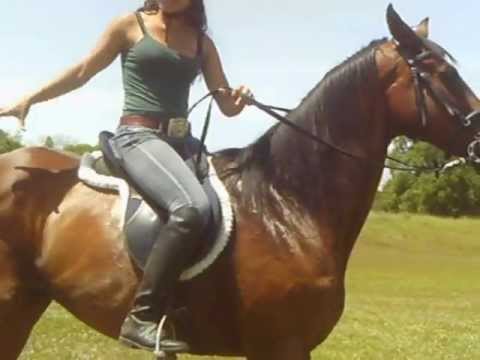
Thoroughbred galloping (Ex race horse)
Robin Gilliam Neal
10 years, 8 months ago
Robin Gilliam Neal added a video to Thoroughbred Horse - Pt 1.
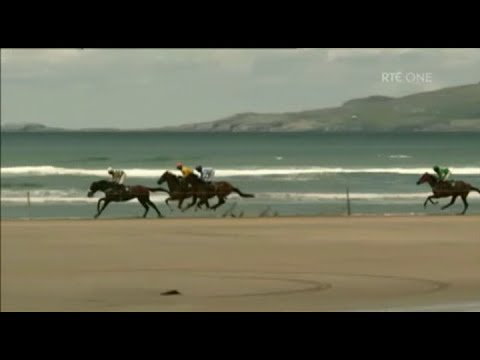
Power In The Blood – The Story of The Irish Thoroughbred
Robin Gilliam Neal
10 years, 8 months ago
Robin Gilliam Neal added a video to Thoroughbred Horse - Pt 1.
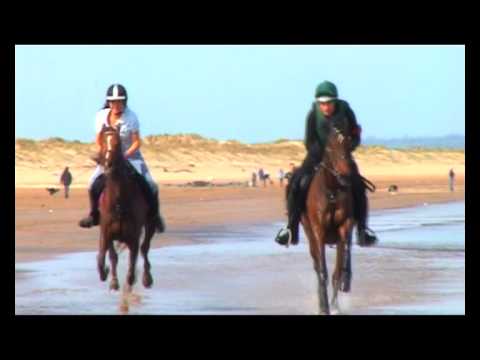
Arab vs. Thoroughbred
Robin Gilliam Neal
10 years, 8 months ago
Thoroughbred Horse - Pt 1 was added to BestInShow.
Robin Gilliam Neal
10 years, 8 months ago
Robin Gilliam Neal added a photo to Thoroughbred Horse - Pt 1.

History of the Thoroughbred Horse
Robin Gilliam Neal
10 years, 8 months ago
Robin Gilliam Neal added a photo to Thoroughbred Horse - Pt 1.

History of the Thoroughbred Horse
Robin Gilliam Neal
10 years, 8 months ago
Robin Gilliam Neal added a photo to Thoroughbred Horse - Pt 1.

Robin Gilliam Neal
10 years, 8 months ago
Robin Gilliam Neal added a photo to Thoroughbred Horse - Pt 1.

History of the Thoroughbred Horse
Robin Gilliam Neal
10 years, 8 months ago
Robin Gilliam Neal added a photo to Thoroughbred Horse - Pt 1.

History of the Thoroughbred Horse
Robin Gilliam Neal
10 years, 8 months ago
Robin Gilliam Neal added a photo to Thoroughbred Horse - Pt 1.

History of the Thoroughbred Horse
Robin Gilliam Neal
10 years, 8 months ago
Robin Gilliam Neal added a photo to Thoroughbred Horse - Pt 1.

History of the Thoroughbred Horse
Author
Photos


